
EURUSD vs Gold Trading Costs After Cashback. Which Broker Is Actually Cheapest?
Most traders compare brokers using spreads alone. It seems logical, but it only shows part of the picture. What actually matters is the final cost per trade after cashback is applied.
This analysis focuses on real trading cost after cashback, not just advertised spreads. We compare EURUSD spreads and gold spreads across major forex brokers, then calculates the real trading cost after cashback rebates. The goal is simple: show what traders actually pay, not what is advertised.
If you are new to this concept, start here:
Understanding Forex Rebates and Cashback
How Trading Costs Actually Work:
The real cost of a trade is not just the spread. It is what remains after cashback is applied.
Methodology and Assumptions:
All comparisons in this analysis are based on standard account types across each broker, using a 1 standard lot trade size.
Spreads, cashback, and final cost per trade are calculated under consistent conditions to ensure a like-for-like comparison.
Standard accounts are used because they represent the most common retail trading setup and allow for direct comparison without additional commission variables.
Different account types, such as ECN or raw spread accounts, may have different pricing structures, including commissions, which are not included in this comparison.
EURUSD Trading Costs Across Brokers
EURUSD is the most traded forex pair in the world. Spreads are tight across most brokers, which keeps differences relatively small.
For context, a 1 pip move on EURUSD when trading 1 standard lot is typically around $10. Small differences in spread or cashback quickly translate into meaningful cost differences over time.
When cashback is applied, it reduces cost, but does not completely change broker rankings. The effect is visible, but limited.
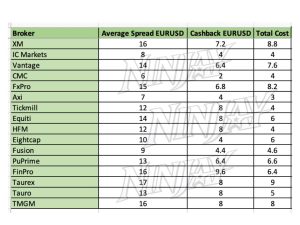
Source: Ninjay Forex Cashback Analysis
EURUSD spread vs final cost after cashback
Gold Trading Costs Across Brokers
Gold behaves differently. Spreads are wider, which creates larger differences between brokers. Once cashback is applied, rankings shift more noticeably.
Over 100 trades, even a 2 point difference per lot translates into a $200 cost difference. For active traders, this compounds quickly without any change in strategy or execution.
The cheapest broker is not the one with the lowest spread. It is the one with the lowest net cost after cashback.
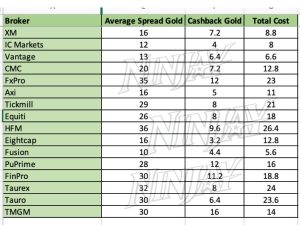
Gold spread vs final cost after cashback
Source: Ninjay Forex Cashback Analysis
What the Data Shows
- Lower spread does not always mean lower trading cost
- Forex cashback reduces cost per lot directly
- EURUSD differences remain relatively tight
- Gold shows significant variation after rebates
- Net cost is the only reliable metric for comparison
Final Cost Comparison After Rebates
Once cashback is included, broker positioning changes:
- XM becomes more competitive after rebates
- IC Markets remains strong but with a smaller gap
- Vantage and Fusion Markets lead on gold due to lower net cost
See a full breakdown here:
XM Cashback Comparison
Open an Account with Cashback Applied
Open through Ninjay to receive cashback on every trade:
Summary
- Trading costs are not defined by spread alone
- Cashback rebates reduce trading cost per lot
- EURUSD costs remain relatively stable across brokers
- Gold trading costs vary significantly after cashback
- The cheapest broker depends on net cost, not spread
This analysis has been widely discussed across the trading community following its release.
Markets move. Strategies evolve. Costs remain constant.
Understanding what you actually pay is one of the few edges in trading that does not depend on prediction.
Once you see the numbers clearly, the difference becomes hard to ignore.